
A patient on antithyroid medication who develops a sudden fever with ulcerative angina in the middle of the night: it is often in such situations that granulocytosis, or more precisely agranulocytosis, is discovered. The term can be confusing, as it refers to both an excess and a collapse of granulocytes depending on the medical context.
In practice, the vast majority of cases encountered in emergency situations involve a severe drop in neutrophils, a type of white blood cell that serves as the first line of defense against bacterial infections.
Granulocytes and neutrophils: what the blood count really measures
When receiving a blood count, the line that matters here is that of neutrophils (PNN). These cells belong to the family of granulocytes, white blood cells characterized by the presence of granules in their cytoplasm. In practice, we refer to agranulocytosis when the absolute number of PNN drops below 0.5 G/L.
At this threshold, the risk of infection becomes significant and requires action within a few hours. The body loses its ability to contain bacteria, even those normally present in the mouth or digestive tract. This is why the first manifestations are often oral or pharyngeal.
To delve deeper into the mechanisms and distinctions between granulocytosis and agranulocytosis, one can refer to the definition of granulocytosis on Pharmanco, which details the various clinical situations associated with these terms.

Medications involved: antithyroid drugs and immunotherapies under enhanced surveillance
Isolated acute agranulocytoses are most often drug-induced. Among the molecules commonly involved are clozapine (an antipsychotic), certain anti-inflammatories, antibiotics like cotrimoxazole, and especially synthetic antithyroid drugs.
Antithyroid drugs: a recent pharmacovigilance reminder
Carbimazole, methimazole, and propylthiouracil are among the most frequent causes of drug-induced agranulocytosis. Since 2022, the ANSM has noted an increase in reports of severe agranulocytosis in the weeks following the initiation of these treatments. The reinforced recommendation is clear: inform every patient of the need for an emergency blood count at the slightest sign of fever or angina.
This risk is not monitored enough in everyday practice. The prescribing physician sometimes mentions the instruction verbally, but written traceability remains inconsistent across practices.
Cancer immunotherapies: an emerging toxicity
Immune checkpoint inhibitors (pembrolizumab, nivolumab, and other anti-PD-1/PD-L1 or anti-CTLA-4) are increasingly used in oncology. Hematological toxicity in the form of severe agranulocytosis, although rare, is now sufficiently documented to be recognized as a specific adverse effect of these immunotherapies.
The presentation can be fulminant, complicating management. Treatment then relies on granulocyte growth factors combined with corticosteroids. Reports vary on the speed of recovery depending on the involved molecules and the patient’s overall condition.
Clinical warning signs: recognizing agranulocytosis before widespread infection
The typical clinical picture associates high fever with chills, ulceronecrotic lesions of the mouth or pharynx, and sometimes cutaneous or pulmonary signs. What stands out is the abruptness of the onset.
- Fever above 38.5 °C with sudden onset, often accompanied by intense chills
- Necrotizing angina or painful oral ulcers unresponsive to usual treatments
- Rapid deterioration of general condition with profound fatigue and diffuse pain
- ENT, digestive, or pulmonary infectious signs without improvement under standard antibiotics
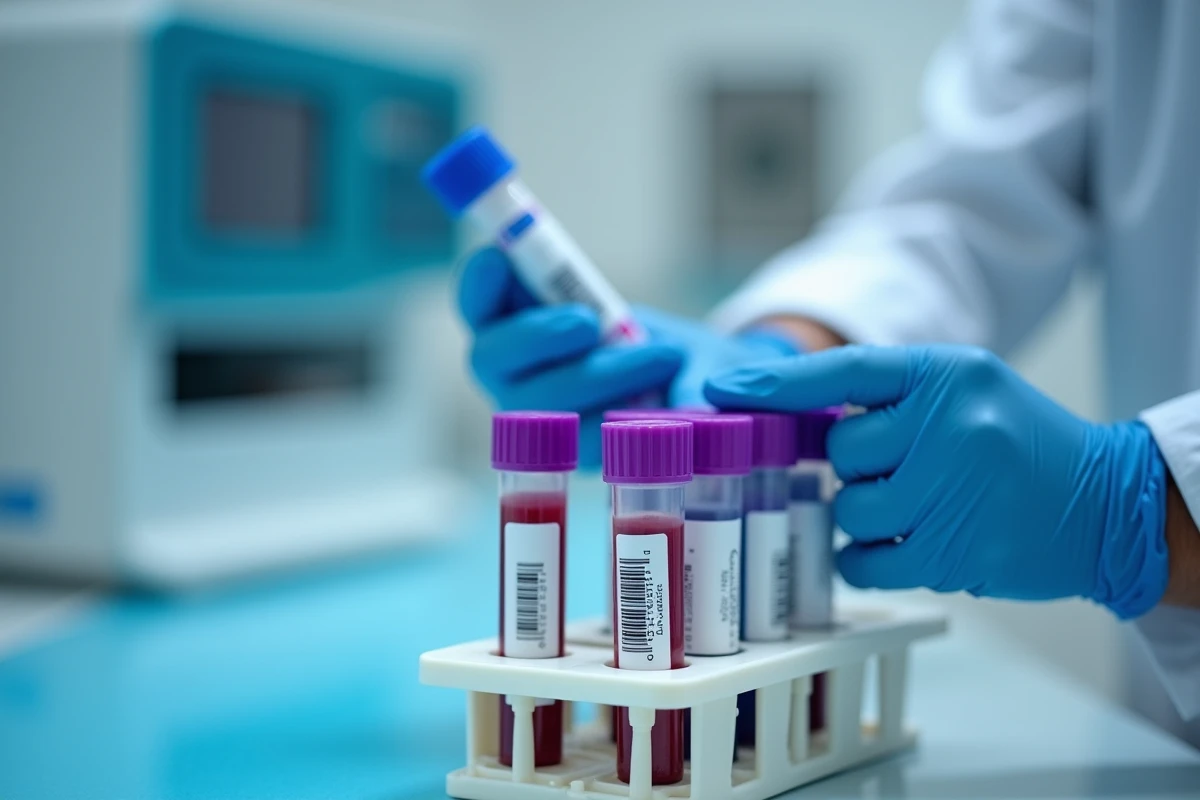
In the face of this picture, the emergency blood count is the only test that confirms or rules out the diagnosis. Waiting an additional 48 hours to see if the fever subsides would be a potentially fatal mistake.
Management and treatment in a hospital setting
A confirmed agranulocytosis requires immediate hospitalization, most often in a laminar flow room or protective isolation. The objective is twofold: to treat the ongoing infection and to stimulate the production of granulocytes by the bone marrow.
Discontinuation of the suspected medication and broad-spectrum antibiotic therapy
The first measure is to immediately discontinue any potentially responsible medication. At the same time, broad-spectrum antibiotic therapy is initiated without waiting for the results of microbiological samples. Every hour counts when the neutrophil count is collapsed.
Granulocyte growth factors
G-CSF (granulocyte colony-stimulating factor) is frequently administered to accelerate the reconstitution of neutrophils. The duration of neutropenia directly influences the prognosis: the longer the period without immune defenses, the greater the risk of severe sepsis.
- Bone marrow biopsy performed to assess the state of the bone marrow and rule out an underlying hematological disorder (leukemia, aplastic anemia)
- Daily monitoring of the blood count until PNN levels rise above the critical threshold
- Adjustment of antibiotic therapy based on microbiological results and clinical evolution
Differential diagnosis not to be overlooked
Not all agranulocytoses are drug-induced. A collapse of neutrophils can also reveal acute leukemia, a myelodysplastic syndrome, or an autoimmune disease. The bone marrow biopsy allows for a decisive diagnosis by showing the appearance and richness of the bone marrow. An accurate etiological diagnosis conditions the entire subsequent management.
Agranulocytosis remains a hematological accident that represents a significant portion of serious iatrogenic effects, with a mortality rate that alone justifies the constant vigilance of prescribers and patients. For anyone on at-risk treatment, the reflex to perform a blood count at the slightest sign of unusual infection can make the difference between rapid management and an irreversible situation.