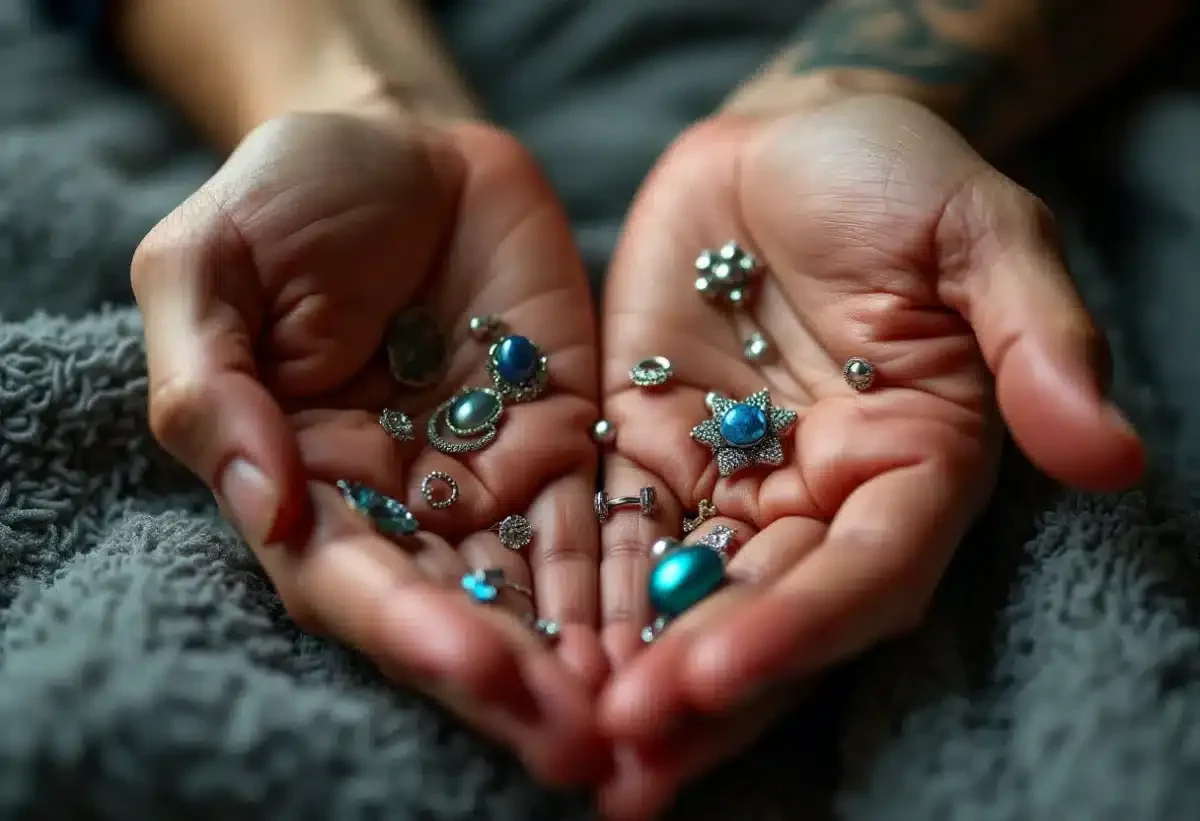
Male genital piercings are experiencing a growing popularity, influenced by a mix of ancestral traditions and modernity. This practice, once confined to certain cultures and subcultures, has become democratized, finding its place in various segments of society.
The Prince Albert, ampallang, and apadravya are among the most sought-after styles, each offering distinct sensations and meanings. Motivations vary: some seek to enhance their sexual pleasure, while others see these piercings as a form of personal expression or a way to strengthen their identity.
Materials and Their Impact on Safety and Healing
In the realm of male genital piercings, the choice of materials is crucial for safety and healing. Several metals are frequently used, each offering unique characteristics.
Surgical Steel:
- Used for rings, bars, and clippers
- May contain nickel, a potential allergen
- Offers color variations when colored
Titanium:
- Preferred for intimate piercings, including the Prince Albert piercing
- Promotes healing and is recommended by experts like Elayne Angel
- Used for rings, bars, and clippers
Gold:
- Primarily used for intimate piercings, offering a more luxurious alternative
Zirconium Oxide:
- Offers color variations, allowing for diverse aesthetic options
Consider that the choice of material is not limited to aesthetics. Professional piercers and health experts recommend prioritizing hypoallergenic materials to minimize the risks of infection and allergy.
By opting for materials like titanium or high-quality surgical steel, you promote better healing and reduce potential complications. Keep these factors in mind when selecting your piercing to ensure a safe and satisfying experience.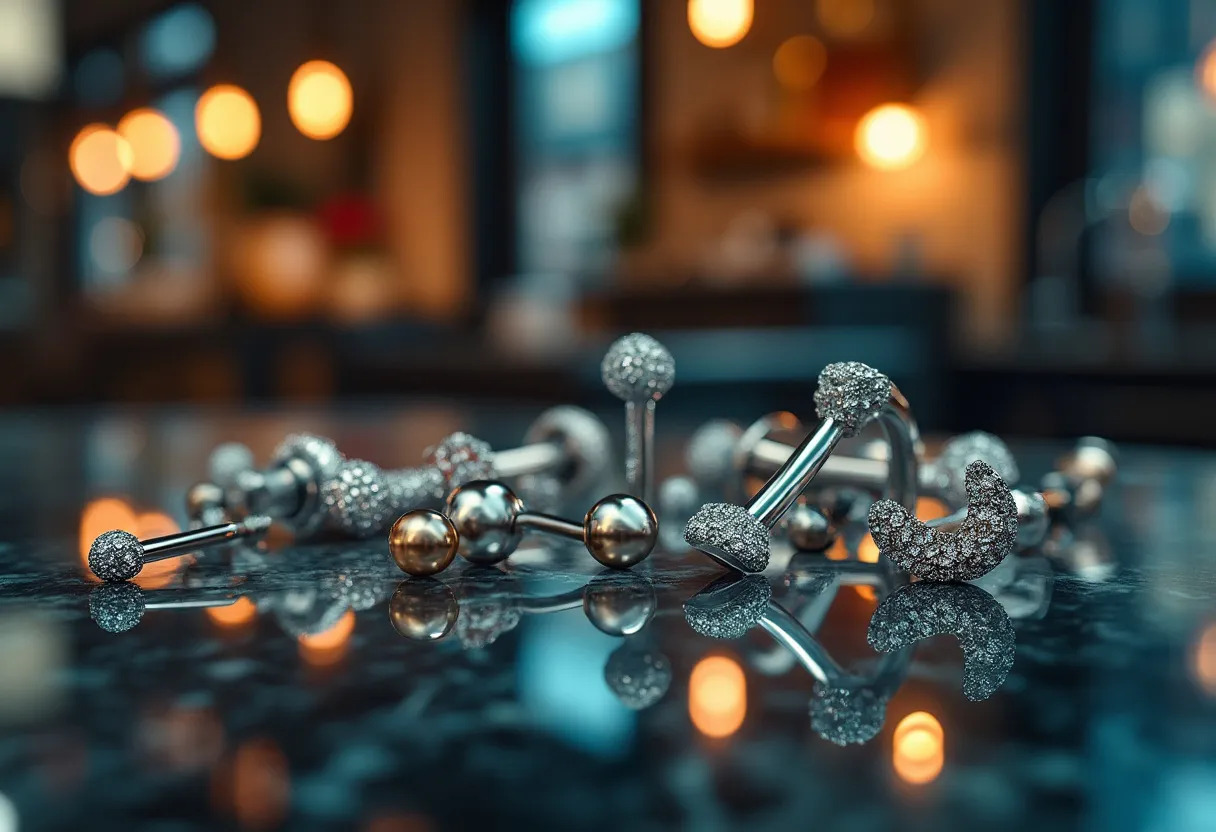
Current Trends and Preferences in Male Genital Piercings
The landscape of male genital piercings is constantly evolving. Choices are diversifying, motivations vary, and preferences change. In this context, several trends are clearly emerging.
- Increase in Male Genital Piercings: A notable growth of 23% has been observed, according to the latest studies published by the Journal of Clinical Piercing. This increase is explained by a growing desire to feel unique and a greater social acceptance of these practices.
- Preference for Titanium: Titanium has become the material of choice for piercings such as the Prince Albert piercing and the hood piercing. Recommended by experts like Elayne Angel, this material is valued for its hypoallergenic properties and its ability to promote healing.
Main Motivations
The motivations behind these choices are diverse. The desire to feel unique and to reclaim one’s body plays a significant role. Shared testimonials on platforms like Pinterest show varied experiences: for some, the piercing is a liberating act, while for others, it is a discovery of sensuality or a totem of confidence.
Testimonials and Influence of Experts
Influential figures in the piercing community, such as Luis Garcia and Brian Skellie, members of the Association of Professional Piercers (APP), emphasize the importance of choosing one’s piercer wisely. Expert advice, the publication of data on complications by the International Piercing Center, and specialized literature contribute to better informing practitioners.
Consider these elements to understand the current dynamics and preferences regarding male genital piercings.