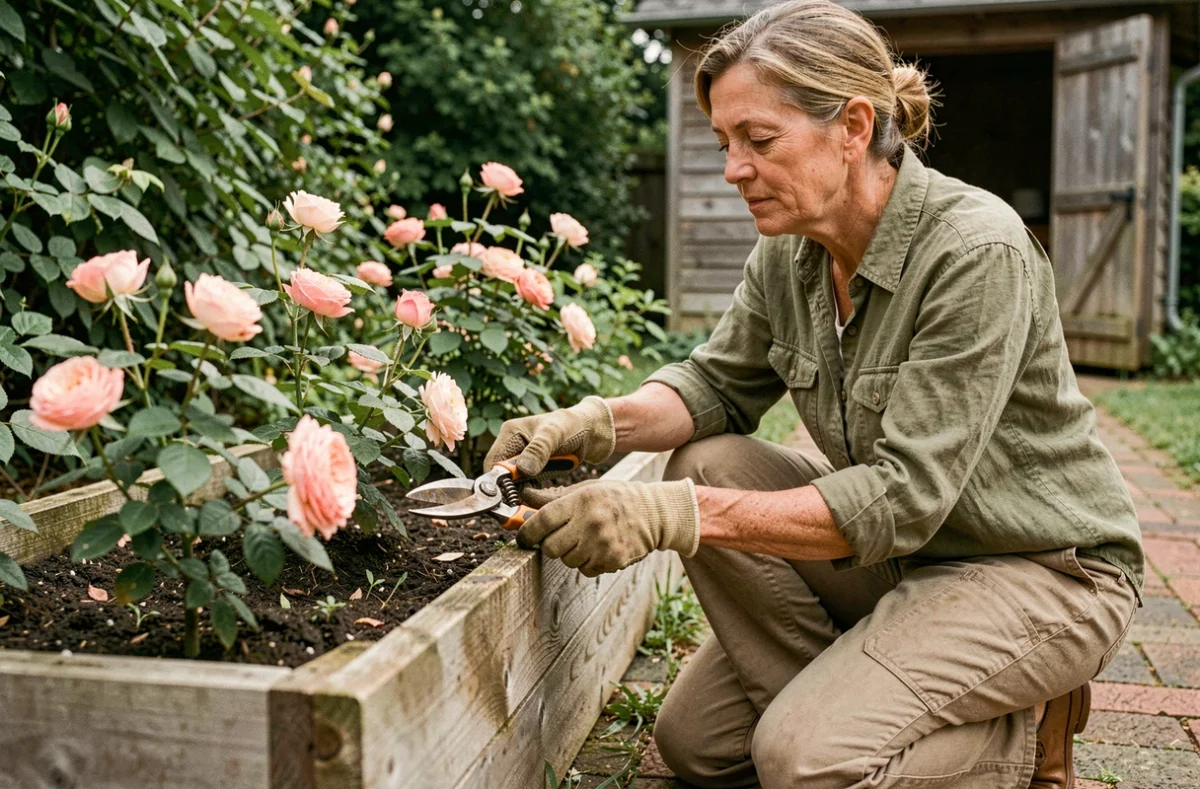
A 300 m² plot with a hedge of privet, three fruit trees, and a sloping bank does not require the same equipment as a flat lawn bordered by a terrace. Before accumulating tools in a garden shed, it is worth considering constraints: the nature of the soil, the existing vegetation, and the noise regulations allowed in your municipality dictate the right gardening equipment choices.
Noise Regulations and Motorization: What Influences the Choice of a Gardening Tool
Competitors readily list lawn mowers, brush cutters, and blowers without mentioning a parameter that can render some of these tools unusable at your location: the hours for noisy work vary from one municipality to another. There is no single national time slot that applies. A municipal or prefectural decree sets the authorized time frames, and they sometimes differ between weekdays, Saturdays, and Sundays.
In practice, if you live in an area where mowing is prohibited on Sundays and limited during the week to a few hours, a noisy gas model becomes a disadvantage. One would then prefer a battery-powered mower, which is significantly quieter, or a programmable robotic mower that can operate during the day without disturbing the neighbors.
Before investing, check your town hall’s website or the collection of administrative acts from your prefecture. This reflex prevents you from buying a powerful gas blower that you can only use for three hours a day. Among the equipment available on jardinjade.com, battery models now cover most common uses without generating these noise constraints.
Soil Working Tools: Spade, Broadfork, and Fork Depending on Your Soil
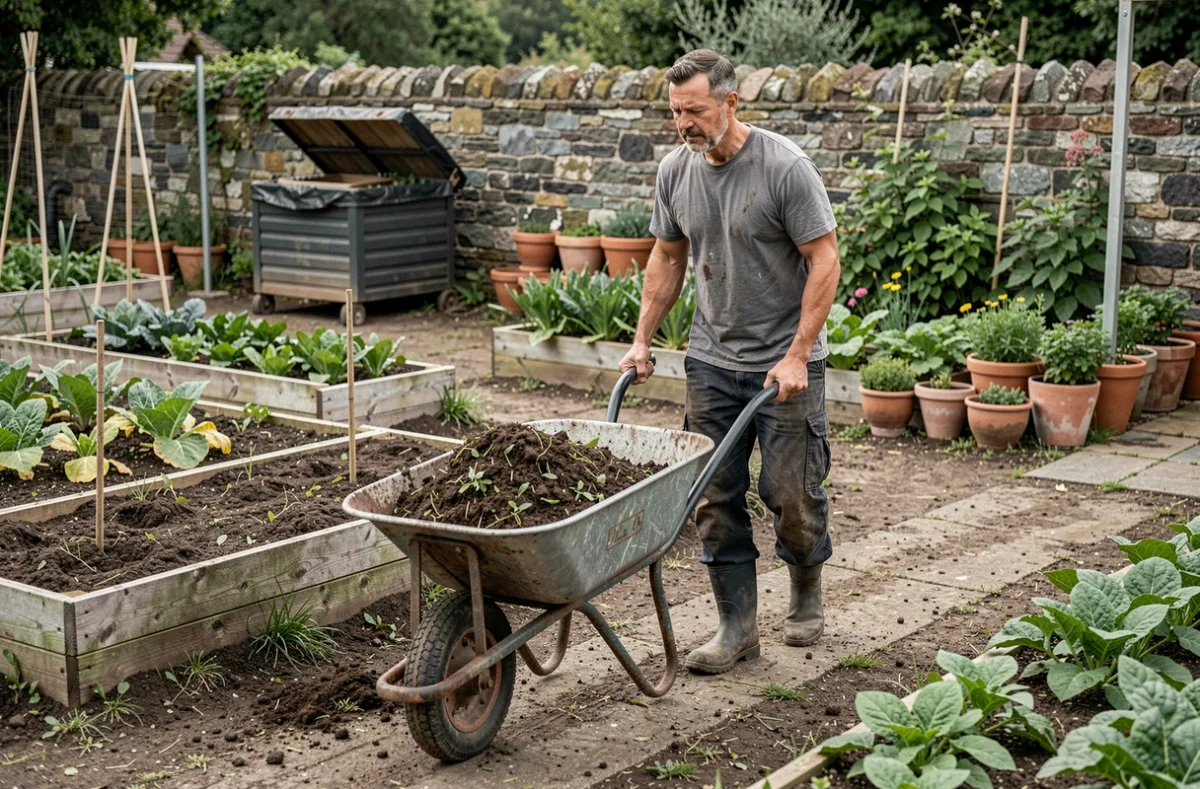
A compact clay soil is not worked like a sandy, light soil. On heavy clay, forcing with a classic spade can strain the back and turn clods that will need to be broken up. The broadfork aerates the soil without turning it, preserving microbial life and limiting physical effort.
On already loose soil or a vegetable garden maintained for several seasons, a digging fork is sufficient to loosen the surface before sowing. The spade remains useful for digging a planting hole or defining a clean border, but it is not meant to be the main preparation tool if the soil is alive and mulched.
Concrete Criteria for Choosing Between Spade and Broadfork
- Clay soil or never worked: the broadfork (four or five tines) requires less force than a spade and breaks clods by leverage without turning.
- Regular vegetable garden on light soil: a digging fork aerates the surface, complemented by a cultivator to crumble the top few centimeters.
- Planting shrubs or occasional work: a narrow-bladed spade (like a border spade) offers more precision than a wide model.
The weight and length of the handle are as important as the shape of the blade. A handle that is too short forces you to bend, while a handle that is too heavy strains the shoulders during a session of more than an hour.
Pruners and Hedge Trimmers: Adapting the Cut to the Diameter of the Branches
Gardeners are often seen forcing a hand pruner to cut a branch over two centimeters thick. The result: a crushed cut that heals poorly, and a pruner whose blade dulls prematurely. An anvil pruner cuts dry wood, while a bypass pruner cuts green wood – confusing the two damages both the plant and the tool.
For hedges, the choice between a battery-powered hedge trimmer and a gas model depends on the length and thickness of the hedge. For a hedge of less than ten meters composed of fine-leaved species (privet, boxwood), a battery-powered hedge trimmer with a 50 to 60 cm blade is more than sufficient. Thick country hedges with woody branches require more power and a longer blade.
Cutting Tools to Keep Sharp
A dull pruner causes tearing on stems instead of clean cuts. The blade should be sharpened with a fine sharpening stone after each significant session, and the blade should be disinfected with alcohol between shrubs to limit the spread of diseases.
The lopper complements the pruner for branches three to five centimeters in diameter. Its long handles create a lever effect that spares the wrists. Combined with a well-chosen pruner, it covers the majority of pruning tasks without resorting to a chainsaw.
Green Waste Management: Shredder and Composting Instead of Burning
Burning green waste is prohibited by Article L. 541-21-1 of the Environmental Code. Burning hedge trimmings at the back of the garden exposes you to a fine, and the smoke generated constitutes a nuisance for the neighborhood.
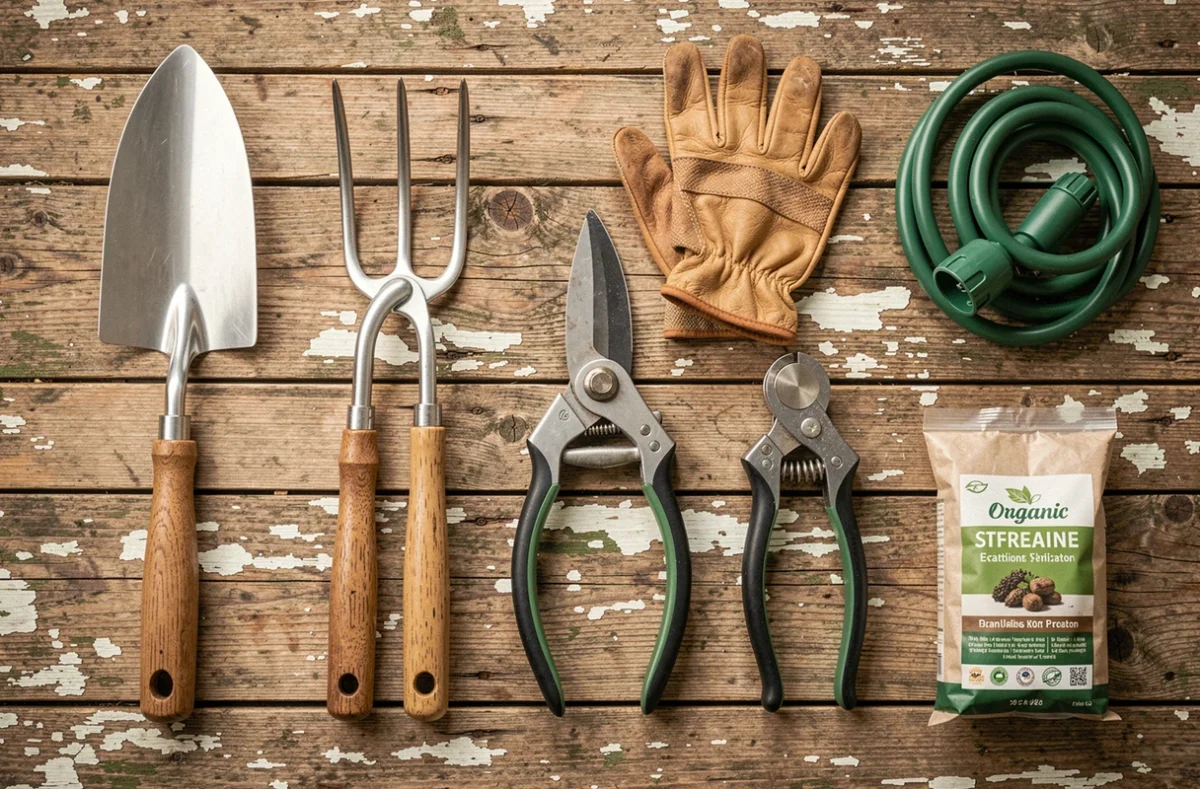
A shredder turns trimmings into reusable mulch directly at the foot of the flower beds. The shredded material reduces watering by limiting evaporation, nourishes the soil as it decomposes, and eliminates trips to the waste disposal site. For a modest-sized garden, occasional rental or collective shredding operations organized by certain municipalities are sufficient.
Since January 1, 2024, municipalities must offer a source separation solution for organic waste. A garden composter fits into this logic: grass clippings, fallen leaves, and small pruning waste find their place there. The compost produced enriches the soil of the vegetable garden without the need for purchased fertilizers.
Watering and Protection: Tools Often Forgotten
People think of cutting and soil working tools, but rarely of targeted watering. A hose with a multi-jet nozzle wastes water on paths and foliage. A drip irrigation system at the base of the plants reduces water consumption and limits the development of fungal diseases related to moisture on the leaves.
On the protection side, gardening gloves are not a decorative accessory. Thorns from roses, wood splinters, and treatment products justify the use of appropriate gloves: thick leather for pruning, coated textile for soil work, waterproof models for handling damp potting soil.
- Drip irrigation or micro-sprinkler: to be favored for flower beds, vegetable gardens, and newly planted hedges.
- Reinforced leather gloves: for pruning roses, brambles, and handling thorny branches.
- Protective glasses: when using a brush cutter or hedge trimmer, debris projections remain a common risk.
Gardening equipment suited to your land boils down to a few well-chosen tools rather than a complete collection. Clay soil, a dense hedge, or local noise regulations are enough to guide you toward one model rather than another. Starting from the constraint of the land, not the catalog, remains the most reliable method to avoid unnecessary purchases.