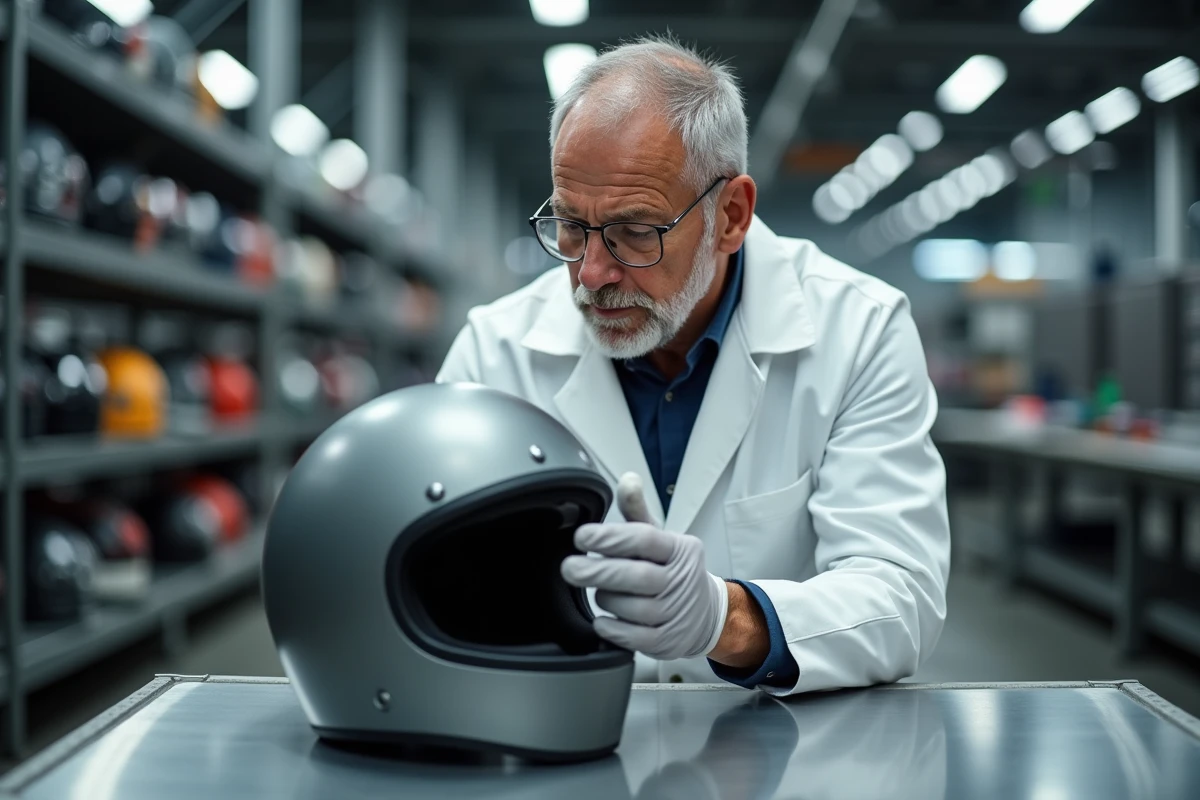
The BMW Motorrad motorcycle helmets feature the blue and white round logo, but their manufacturing relies on a network of specialized industrial partners. Understanding who designs and assembles these high-end helmets allows for a better assessment of their actual quality, beyond the brand’s prestige.
Manufacturing of BMW Helmets: The Key Role of Partner LS2
BMW Motorrad does not own a factory dedicated to helmet production. The Bavarian brand entrusts manufacturing to third-party suppliers, according to specifications that it defines and controls. This model is common in the motorcycle industry: Ducati, Harley-Davidson, and Triumph operate in the same way for their accessories.
Since 2023, LS2 Helmets is the main partner of BMW Motorrad for helmet production. This Chinese-origin manufacturer, based in Spain, has massive industrial capabilities and already supplies several licensed brands. The partnership covers the design of shells, assembly of interiors, and integration of ventilation systems.
To delve deeper into the topic, you can consult the BMW motorcycle helmets on Junior Car which details the different models and their origins.
BMW retains control over the design, shell materials (carbon, fiberglass), and safety requirements. Each model goes through the Motorrad design office in Munich before validation. The result: a helmet designed by BMW, manufactured by a specialist in mass production.
ECE 22.06 Standard and Safety: What Changes for BMW Helmets
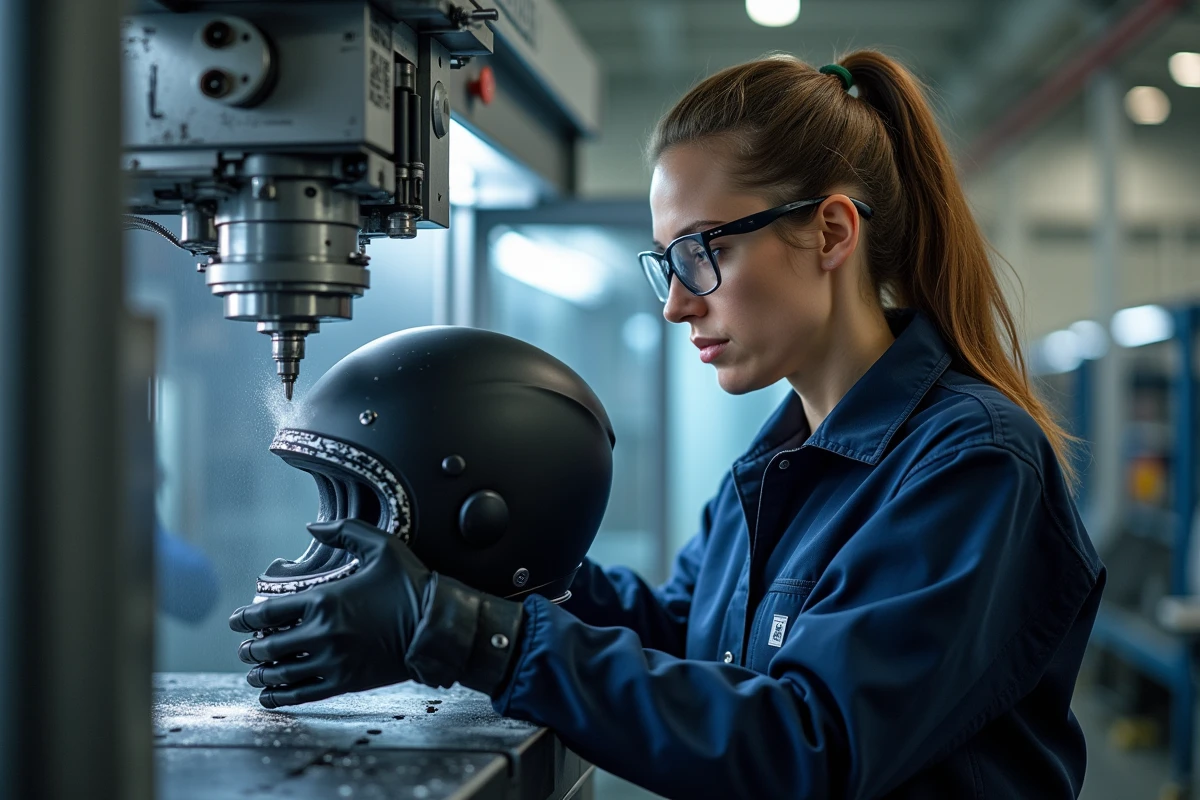
Since March 2025, the entire range of BMW Motorrad equipment complies with the ECE 22.06 standard. This certification replaces the previous ECE 22.05 and imposes significantly more demanding tests.
Have you noticed the mention “22.06” on the label of a recent helmet? It guarantees that the model has undergone oblique impact tests, in addition to the standard linear impacts. These oblique tests simulate slides on asphalt, a common scenario in motorcycle accidents.
The 22.06 standard also requires validation of integrated accessories: sun visor, communication system, camera mount. A BMW helmet equipped with a Bluetooth intercom is tested with this accessory in place, not just with the bare shell.
- Oblique impact tests simulating head rotation on the ground, absent from the previous standard
- Mandatory validation of each accessory mounted on the helmet (screen, visor, intercom)
- Expanded test area covering the chin guard of modular helmets, a historical weak point
For modular helmets like the System 8, this evolution has a direct consequence: the chin guard is now tested in both closed and open positions. The previous modular helmets certified 22.05 were not subjected to this constraint.
Carbon Shell and Aerodynamics: The Technology of BMW M Series Helmets
The M Pro Race range represents the technical pinnacle of BMW’s offering. Its carbon fiber shell reduces overall weight while maintaining high rigidity. Carbon also allows for more refined shapes, which directly influences aerodynamic behavior.
Why this choice of material? Carbon absorbs shock energy better than fiberglass at equivalent thickness. The shell can therefore be thinner, which lightens the helmet without compromising protection.
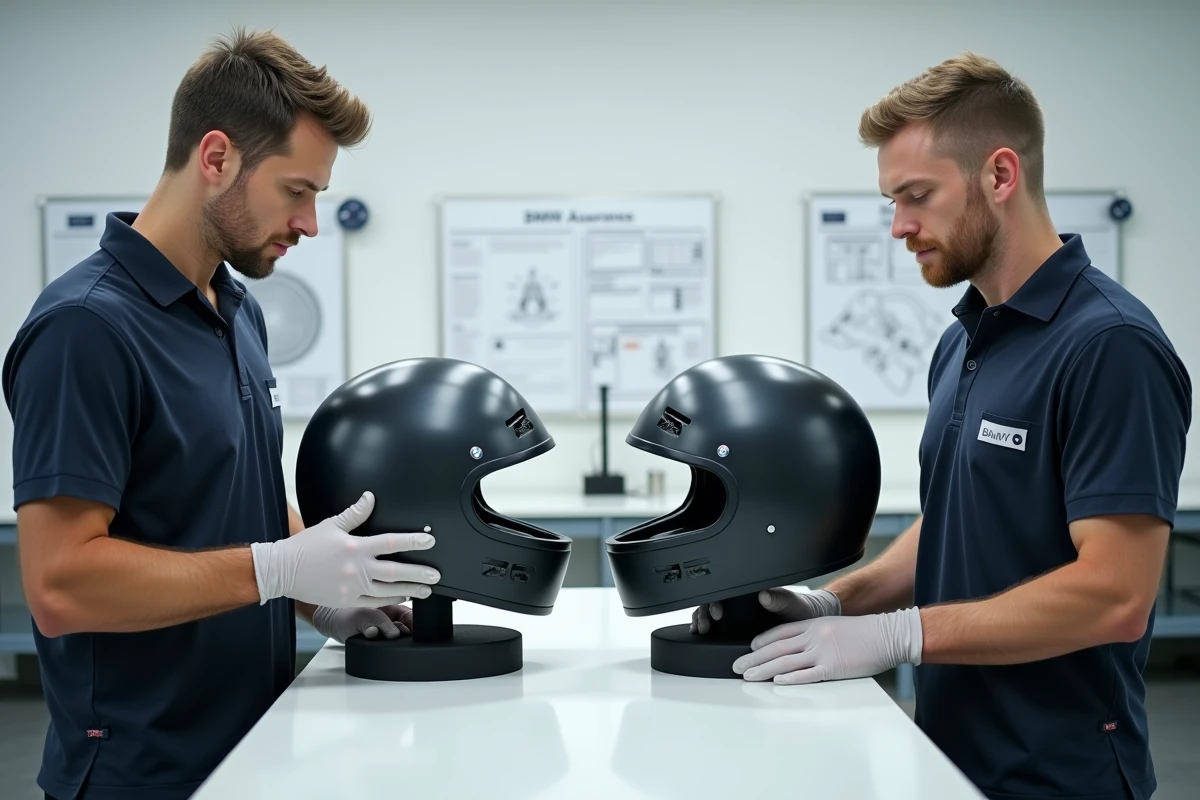
The BMW M Series helmets feature a shell optimized for high speeds, with less vibration than competing models like the Shoei Hornet ADV. This advancement comes from the collaboration between BMW Motorrad and teams engaged in MotoGP competition, where aerodynamic constraints are maximal.
The shell profile is refined in a wind tunnel to limit turbulence around the neck and shoulders. A helmet that generates less lift tires the rider less on long highway trips. This aerodynamic work is also reflected in the noise level: the noise reduction primarily comes from the shape of the shell, not just from the interior foams.
Embedded IoT Sensors: The Next Step for Connected Motorcycle Helmets
The most recent angle in the development of high-end BMW helmets concerns the integration of IoT (Internet of Things) sensors directly into the helmet structure. The goal: to monitor wear status in real-time and alert the rider when the helmet no longer meets optimal protection functions.
A motorcycle helmet degrades invisibly. The foams of the inner padding lose their density, and the shell can accumulate micro-cracks after a minor impact. Without a sensor, the rider has no reliable indicator other than the age of the helmet.
Integrated sensors in the inner padding measure the residual compression of the foams and detect impacts, even minor ones. This data is sent to a mobile application that displays the helmet’s status as a protection score. When the score falls below a defined threshold, the rider receives a replacement alert.
- Pressure sensors in the inner padding to track foam sagging over the months
- Miniature accelerometer detecting impacts, even those the rider may not have perceived
- Data transmission via Bluetooth to the BMW Motorrad Connected app
- Complete impact history available, useful in case of helmet resale
This technology is still relatively rare among competing manufacturers. Most brands limit themselves to integrated communication or navigation systems, without addressing the issue of wear tracking. BMW Motorrad positions the helmet as an active safety equipment, not just a passive accessory.
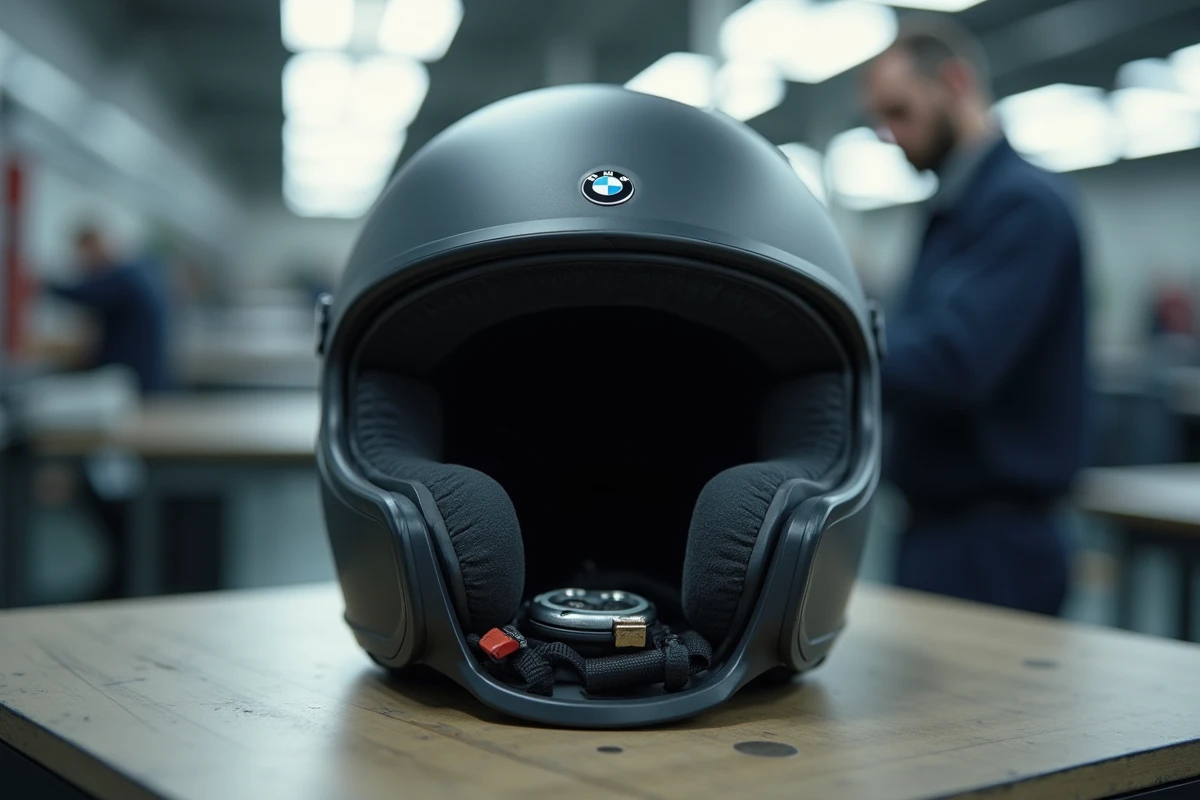
The choice of a high-end BMW helmet is based on three concrete pillars: a controlled industrial partner with LS2, an ECE 22.06 certification that covers real accident scenarios, and materials derived from competition. The arrival of IoT sensors adds a layer of monitoring that the market does not yet offer in series from other brands. The BMW logo on a helmet is not just a marketing argument; it is the trace of a documented engineering process from start to finish.