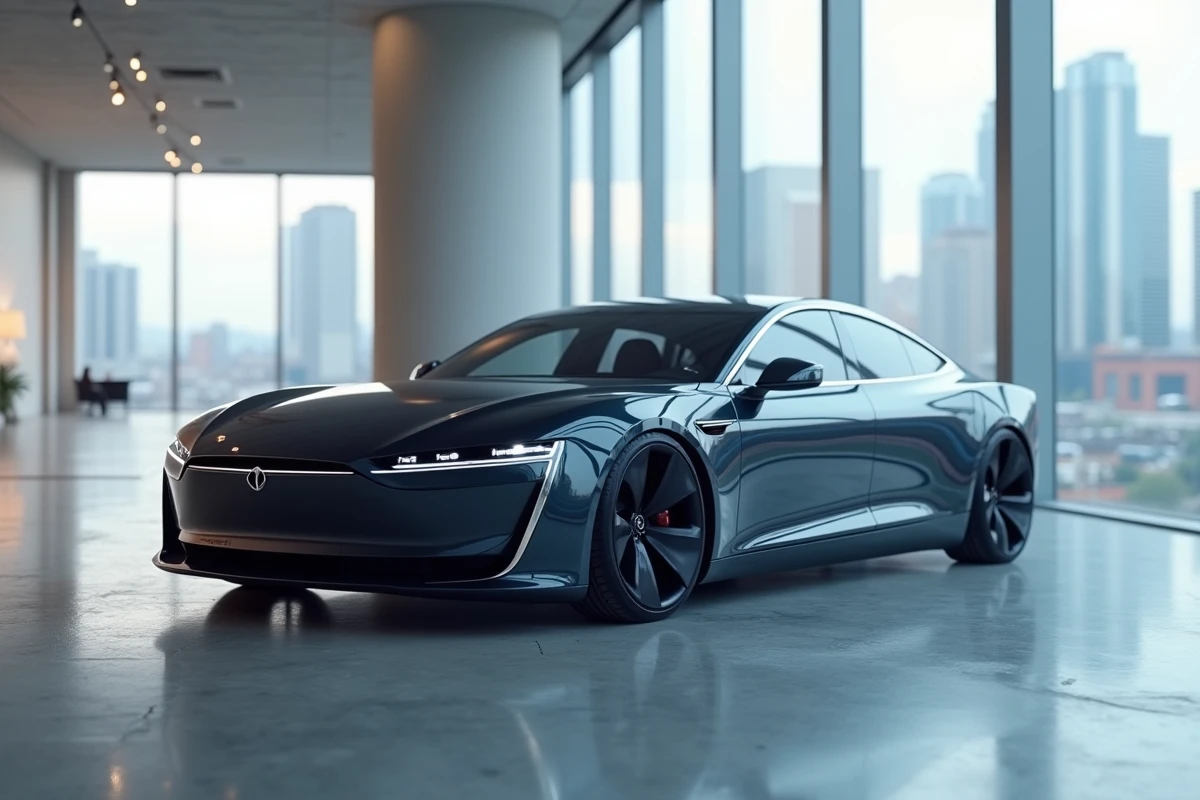
Which powertrains truly dominate new car sales in France, and how are the innovations presented at the 2024 Paris Motor Show reshaping the hierarchy between electric, hybrid, and thermal? Recent figures challenge several preconceived notions about the automotive transition.
Market shares of new powertrains in France: the table that changes the narrative
Discussions about automotive trends in 2024 often focus on electric vehicles. Data from the Ministry of Ecological Transition tells a more nuanced story.
| Powertrain | Dynamics 2024-2025 | Main identified barrier |
|---|---|---|
| Non-rechargeable hybrid | Leading new powertrain, over 40% market share in 2025 | None – massive adoption |
| Electric (BEV) | Sustained growth, driven by incentives | Purchase price, charging infrastructure |
| Plug-in hybrid (PHEV) | Stabilization | Higher cost than simple hybrid, complexity of use |
| Pure thermal (petrol/diesel) | Gradual decline | Euro 7 standards, ecological penalty |
The key takeaway: non-rechargeable hybrids have become the dominant powertrain for new cars in France. This shift has occurred without most automotive media documenting it precisely. Manufacturers are repositioning their ranges around simple hybrid models, which are cheaper and less restrictive than pure electric or plug-in hybrids.
To follow Journal Global’s auto news, this reshaping of sales is the main thread of the year.
Public subsidies and social leasing: the sociology of electric vehicle buyers in 2024
The ecological bonus and conversion premium have existed for several years. What has changed in 2024 is the extent of targeting towards low-income households.
Official data indicates that in 2024, 83% of households purchasing a new electric car received at least one form of aid. Social leasing, which allows access to an electric vehicle for a very low monthly payment, has amplified this phenomenon.
This policy reshapes the typical profile of electric buyers. It is no longer just wealthy households opting for a premium SUV. The buyer base is expanding to households that would not have considered electric at the catalog price.
- Social leasing has made compact electric models accessible to households below a certain income threshold, with very low monthly commitments
- The ecological bonus remains conditional on an environmental score that excludes certain models assembled outside Europe
- Regional aids can be combined in several areas, creating significant final cost disparities depending on the buyer’s location
This aid mechanism raises a question of budget sustainability. The number of applications processed has far exceeded the government’s initial forecasts.
Deficit in the renewal of the European vehicle fleet: the data that trend pages ignore
Articles on automotive innovations in 2024 focus on new models. They overlook a structural tension: the European vehicle fleet is aging despite the growth in new vehicle sales.
Between 2020 and 2024, a deficit of several tens of millions of vehicles has accumulated at the European level. Three factors explain this gap.
The average price of new cars has risen faster than household purchasing power. Entry-level models are gradually disappearing from catalogs, replaced by more profitable SUVs for manufacturers. Regulatory uncertainty (timelines for banning thermal vehicles, changes to the bonus) is causing some buyers to postpone their decisions.
This aging fleet has direct consequences on the actual emissions of the sector. A thermal vehicle over 15 years old emits significantly more than a recent model, even if it is also thermal. Renewing the old fleet is as important as selling new electric vehicles to meet climate goals.
2024 Paris Motor Show: solid-state batteries and autonomous driving on the agenda
The 2024 Paris Motor Show highlighted two technological axes that will structure the coming years for car manufacturers.
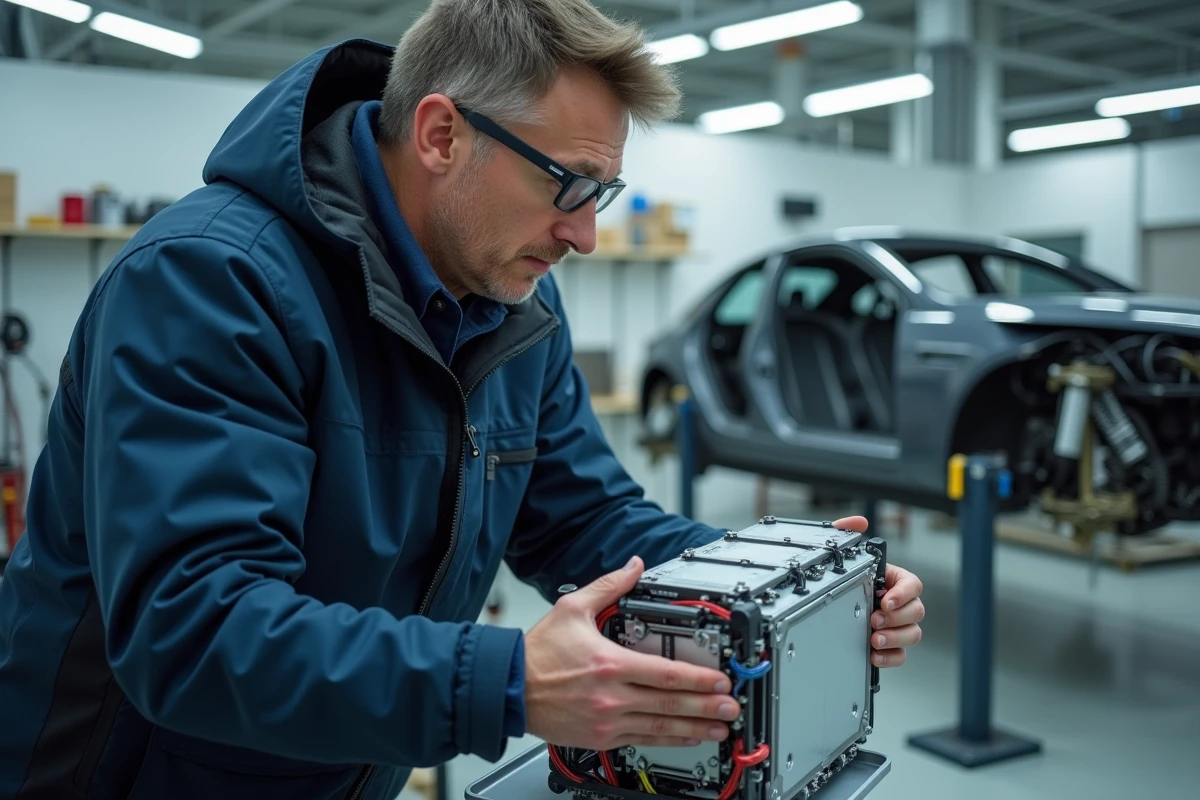
Solid-state batteries for electric vehicles are moving from the conceptual stage to the final development phase. According to Keysight Technologies, this technology promises lighter and more stable batteries than current lithium-ion batteries. The range of electric models could significantly improve while reducing charging times.
Autonomous driving incorporating artificial intelligence also took a prominent place at the show. Several manufacturers presented sedans equipped with advanced driver assistance systems. These systems combine cameras, sensors, and AI processing to manage complex driving situations.
- Solid-state batteries use solid electrolytes instead of liquids, reducing fire risks and overall weight
- The first commercial applications of solid-state batteries are expected in the coming years, starting with premium models
- The autonomous driving systems presented at the Motor Show remain at level 2+ or 3, far from complete autonomy without human supervision
These innovations will not transform the market overnight. The transition from demonstration to mass production remains the bottleneck for solid-state batteries as well as for advanced autonomous driving.
The automotive market in 2024 can be viewed through two overlapping lenses: on one side, real technological innovations driven by shows and laboratories; on the other, an aging fleet, budget-constrained buyers, and a simple hybrid powertrain capturing the majority of new sales. The most structuring data for the coming years remains this gap between technological promises and the actual capacity of households to renew their vehicles.