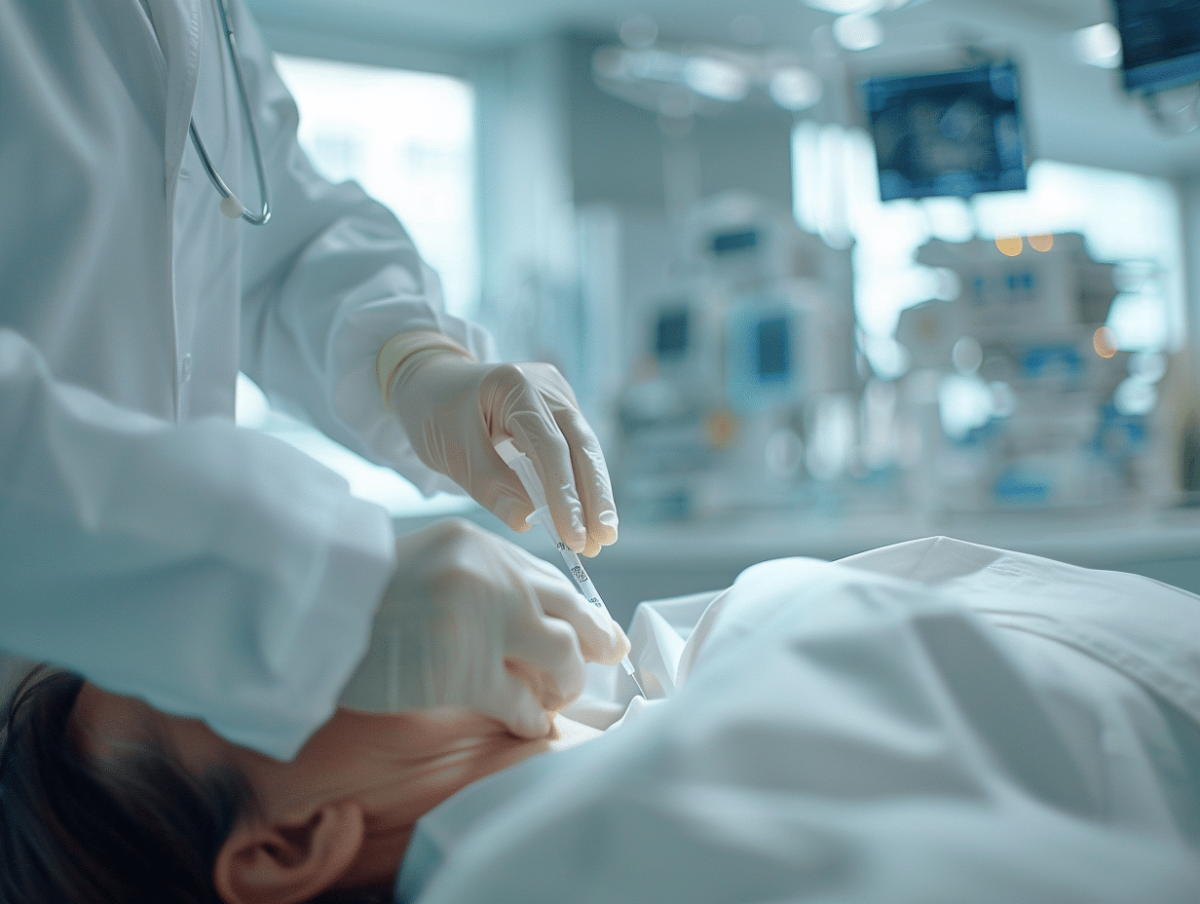
The range of diagnostic techniques in medicine is vast and constantly evolving, each offering specific advantages for detecting various medical conditions. At the heart of these methods, fine needle aspiration (FNA) stands out as a minimally invasive, precise, and relatively simple procedure. Commonly used to evaluate masses or suspected nodules, particularly in organs such as the thyroid, breasts, or lymph nodes, this approach utilizes a small caliber needle to collect cell samples for cytological analysis. It provides healthcare professionals with a pathway to obtain major diagnostic information with minimal discomfort for the patient.
Medical diagnostic techniques and the importance of fine needle aspiration
In the maze of medical diagnostic techniques, fine needle biopsy (FNB) holds a prominent place. This procedure, often performed by a radiologist or endocrinologist, allows for the collection of cells or fluid from a suspicious lesion to determine its nature, benign or malignant. FNB proves particularly effective for the diagnosis of tumors and cysts, and is performed with minimal incision, thereby reducing risks and side effects for patients.
Fine needle aspiration is a technique of choice in the face of cancer, allowing for the collection of tissue samples directly from the abnormal area. The accuracy of the diagnosis relies on the microscopic examination of the collected samples, often supplemented by more advanced analyses such as immunohistochemistry. The results of these examinations then guide the physician towards the most appropriate treatment, whether surgical or therapeutic.
In the context of a cyst puncture or suspicion of cancer, the ASP sampling is performed with care and expertise. This intervention can be carried out in the physician’s office or in a hospital setting, often guided by imaging techniques such as ultrasound or computed tomography for increased precision. The processing of the collected samples, entrusted to a pathologist, results in a detailed report that will be crucial for the patient’s ongoing care pathway.
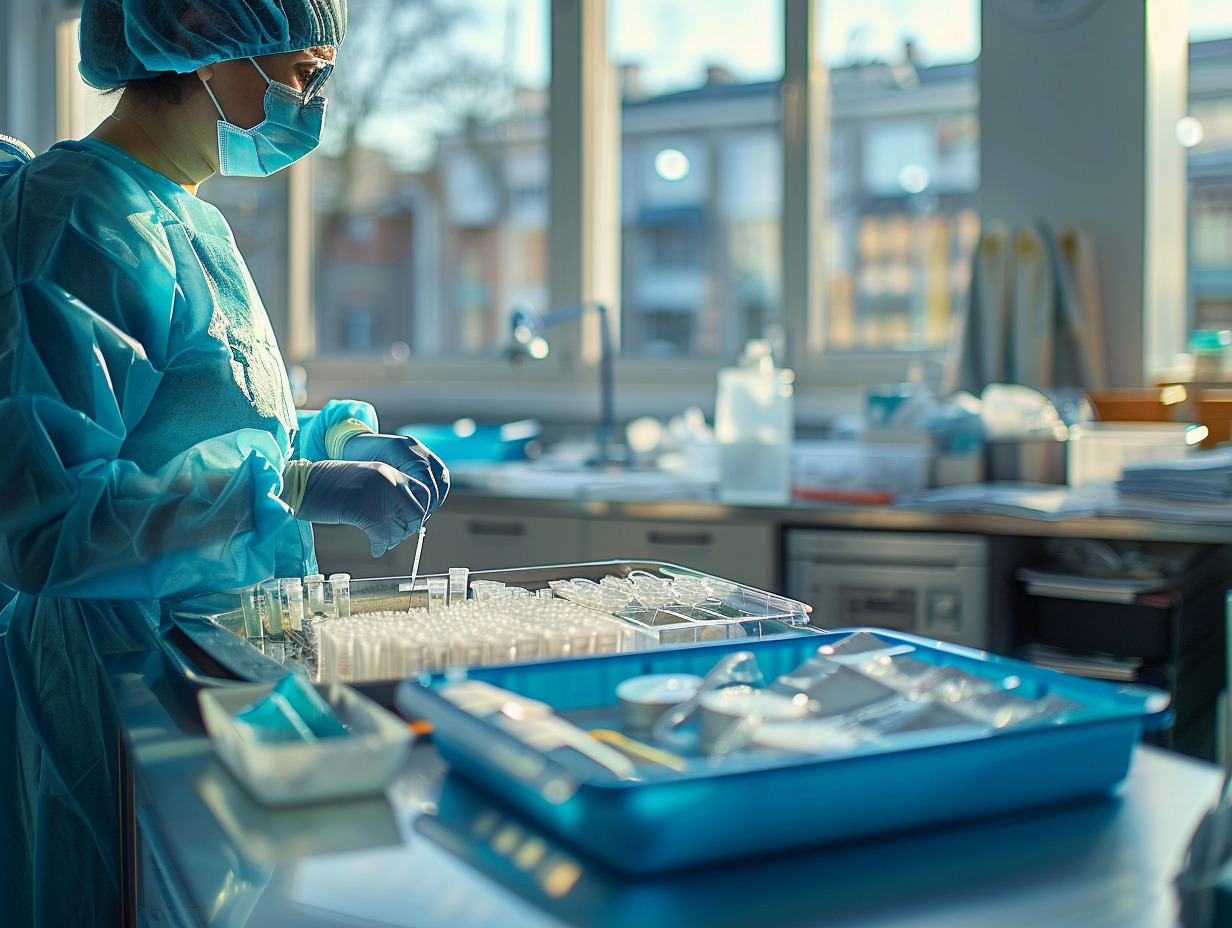
Procedure, interpretation of results, and reliability of fine needle aspiration
The fine needle biopsy (FNB) often begins with the administration of a local anesthetic, although this is not always required, especially for less sensitive sites. The procedure may be assisted by imaging techniques such as ultrasound, computed tomography, or endoscopic ultrasound, which guide the needle precisely to the target area. Ultrasound, in particular, proves to be an indispensable tool for sampling organs like the thyroid, where thyroid nodules are commonly evaluated.
After sampling, the specimen is sent to a pathology laboratory where a pathologist conducts a microscopic examination. The cytology report generated details the cellular composition of the sample and is fundamental for diagnosis. This report may reveal the presence of abnormal cells, indicating cancer, or inflammatory cells, suggesting conditions such as Hashimoto’s thyroiditis.
The reliability of FNB is closely linked to the practitioner’s skill and the quality of the collected sample. Studies place the sensitivity and specificity of this technique at high levels, especially when performed by expert hands. However, complementary examinations may be necessary to confirm the nature of a lesion, particularly when FNB results are inconclusive or ambiguous.
FNB is distinguished by its ease of execution and minimization of discomfort for the patient. It remains a method of choice for characterizing palpable lesions and anomalies detected by imaging. Consider that this technique does not replace a complete histological study in certain cases, such as solid thyroid lesions where the risk of malignancy is high, in which case the level of thyrotropin may be an additional indicator to consider.